- HubPages»
- Health»
- Mental Health»
- Addiction
Alcoholic Fatty liver: Pleasure or pain?

Alcoholic Fatty Liver
Alcoholic Fatty Liver
Fatty liver pains!!!!!
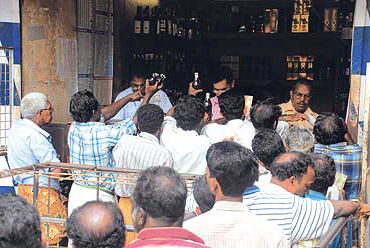
Fatty infiltration of the liver and alcoholic fatty liver disease are not very uncommon terms. If you drive along the roads of Kerala, during the beginning of any month, you can see long queues in front of shops. Please don’t be mistaken. These are not the queues for shops selling essential commodities. They are the queues in front of liquor shops.
The news in one of the weekly magazines last year depicting Kerala as the state consuming maximum amount of liquor in India was not surprising to me. As per the news, Kerala has the highest per capita consumption of over eight litres (1.76 gallons) per year. This will be maximal during festival seasons like Onam and Christmas. Alcohol is used for celebrations. But in the long run, is it pleasure or pain? Maximum amount of damage is caused to the liver by prolonged alcohol consumption. In this hub, I try to look at the damage caused to the liver by alcohol such as fatty infiltration of the liver and cirrhosis of the liver.
Normal Liver
Normal Liver
Normal liver
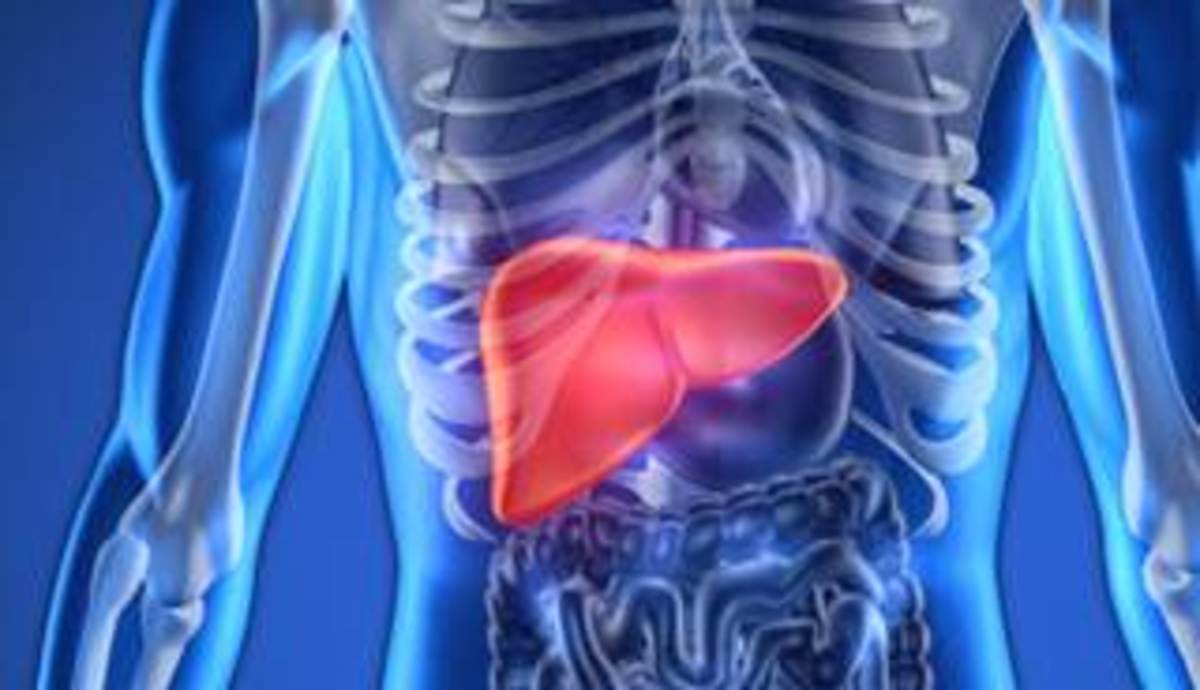
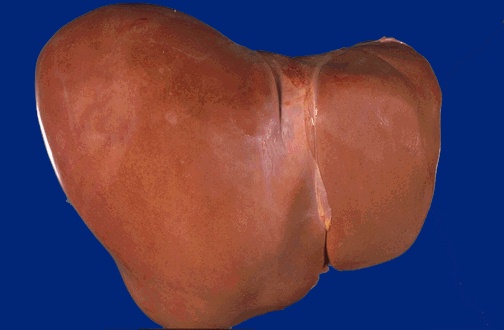
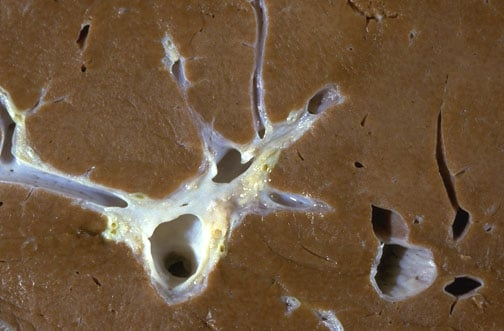
A normal liver is about 1200 to 1600 grams and it performs the following functions
ØMetabolism – Carbohydrate, Fat & Protein
ØSecretory – bile, Bile acids, salts & pigments
ØExcretory – Bilirubin, drugs, toxins
ØSynthesis – Albumin, coagulation factors
ØStorage – Vitamins, carbohydrates etc.
ØDetoxification – toxins, ammonia, etc.
Alcoholic Fatty Liver
-
Another form of liver disease secondary to alcohol intake is alcoholic hepatitis.
-
It is developed acutely usually following bout of heavy drinking.
-
Here there is localised death of liver cells.
Alcoholic Fatty Liver Disease
Liver is the most common site for accumulation of fat because it plays the central role in fat metabolism. Alcoholic fatty liver disease is the most common cause for fatty liver. Fat in the form of free fatty acids enter the liver from dietary sources and from adipose tissue (tissue where fat is stored). Majority of these free fatty acids are first converted into triglycerides (another form of fat) and then converted as lipoproteins. Lipoproteins are released into the circulation from the liver cells as plasma lipoproteins i.e., low density lipoproteins and very low density lipoproteins.
Symptoms of fatty liver may not be evident in the beginning. Fatty liver symptoms occurs gradually over a period of time.
Alcoholic Fatty Liver
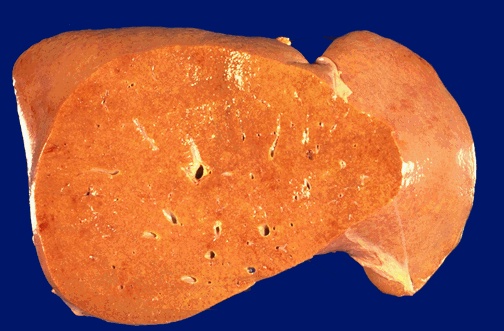
Alcoholic Fatty Liver
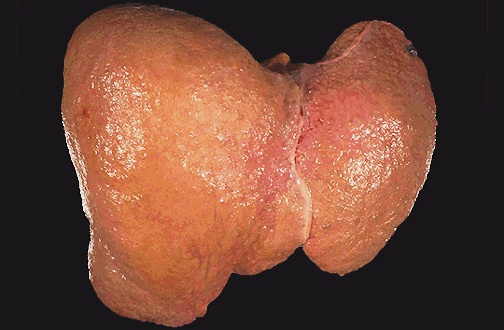
Alcoholic cirrhosis
Cirrhosis of the liver usually begins as micro nodular cirrhosis.
The liver will be very large, fatty and usually weighs above 2 kg.
The surface of the liver is studded with small nodules of almost equal sizes.
If the person does not stop drinking even after diagnosing liver cirrhosis it can progress to serious disease.
Alcoholic Fatty Liver
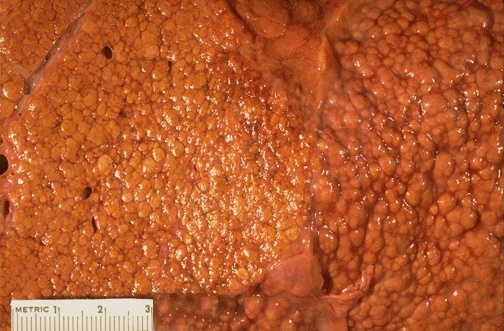
Micronodular cirrhosis
Nodules are formed as a result of regeneration by the surviving liver cells.
Image on the right shows the close up view of small nodules studded like buttons all over the surface of the liver
Glistening and smoothness of the surface of the liver is lost in cirrhosis of the liver
Oesophageal varices
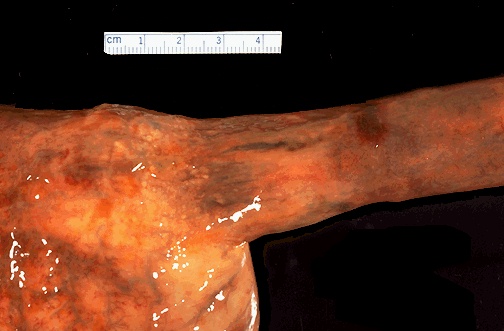
Oesophageal Varices
In complicated cases of liver cirrhosis, blood vessels on the oesophagus will be dilated (known as oesophageal varices).
Oesophageal varices are formed because of obstruction in the portal veins (veins supplying the liver)
Engorged veins have a high tendency to bleed in patients with cirrhosis of the liver.
Caput Medusae
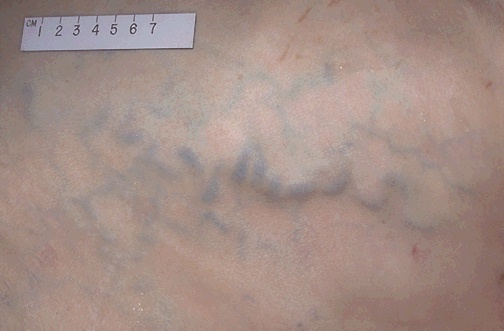
Caput Medusae
Caput medusae are engorged veins seen on the surface of abdomen (engorged vessels on abdomen) of a person with portal hypertension
It is because of the dilation of periumbilical collateral veins
Dear friends, unfortunately, if anyone of you has difficulty in quitting alcohol, please look at those images and think about the harm alcohol does to your body. Fatty infiltration of the liver if detected early is curable. If the person has the will and courage to stop excessive drinking, he/she can avoid getting alcoholic fatty liver disease and subsequently cirrhosis of the liver.
Other health related hubs by thumbi7
- How to improve memory and learning skills?
Intelligence quotient can differ due to genetic and environmental reasons. However your memory power and brain power can be improved by using certain strategies whatever your IQ may be. This hub concentrates on some simple and effective measures to i - “Ventilator” Care of a patient on ventilator.